Last updated on 2/26/26 | First published on 2/25/26 | Literature review current through Sep. 2026
[cite]
Authors:
Kevin Gardner CHT, AEMT, UHMS SC,
Topic editors:
Jeff Mize RRT, CHT, UHMSADS,
Elaine Horibe Song MD, PhD, MBA,
Tiffany Hamm RN, BSN, CWS, ACHRN, UHMSADS,
more...
Coauthor(s)
Kevin Gardner, CHT, AEMT, UHMS SC
Disclosures: Nothing to disclose
Editors
Jeff Mize, RRT, CHT, UHMSADS
Disclosures: Nothing to disclose
Elaine Horibe Song, MD, PhD, MBACo-Founder and Editor, Wound Reference, Inc;
Professor (Affiliate), Division of Plastic Surgery, Federal University of Sao Paulo;
Volunteer, Association for the Advancement of Wound Care;
Google Scholar Profile
Disclosures: Nothing to disclose
Tiffany Hamm, RN, BSN, CWS, ACHRN, UHMSADS
Chief Nursing Officer, Wound Reference, IncDisclosures: Nothing to disclose
What is Hyperbaric Oxygen Therapy?
Hyperbaric oxygen is a medical treatment in which the patient breathes pure oxygen under increased pressure.
It is administered in a special environment (called chamber) and is the treatment for many medical and surgical conditions. It may be the main treatment for certain conditions but is usually part of an overall plan of care involving surgery, antibiotics or other therapy.
How does HBOT work?
Hyperbaric oxygen is a simple concept. Normally, the air we breathe has a little bit of oxygen - about 21%. The air pressure around us is 14.7 pounds per square inch (psi). Inside the chamber, we increase the air pressure to feel like about 3 times what it is outside. Also, you will breathe 100% pure oxygen. This high pressure and pure oxygen push a lot more oxygen into your blood than normal. This extra oxygen travels to every part of your body. Getting this extra oxygen helps your body heal better and fight off infections for certain health problems.
How is HBOT delivered?
Hyperbaric oxygen therapy (HBOT) is delivered through a hyperbaric oxygen chamber. The chamber consists of either a single person chamber (monoplace) or a multiple patients chamber (multiplace chamber).
- A monoplace chamber is approximately 7 feet long and 2 and a 1/2 feet in diameter. The walls are made of clear acrylic plastic.
- A multiplace chamber is cylindrical or rectangular in shape with doors on either end (Figure 1).
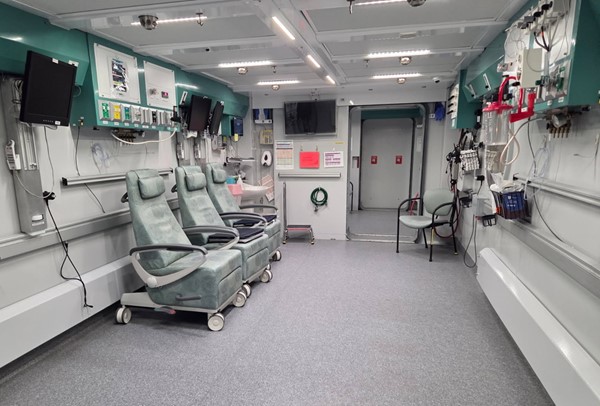
Figure 1. Hyperbaric Oxygen Therapy Multiplace Chamber
What happens inside the HBOT chamber?
- You will be seated in a comfortable chair.
- After all the patients are in, the inside attendant will close the doors.
- The chamber will begin to be pressurized with medical grade air.
- After it reaches the prescribed pressure you will breathe 100% oxygen through an oxygen delivery device (a hood or a mask).
- All patients are closely monitored by board certified staff and a physician trained in hyperbaric medicine.
How long is each treatment session?
Each session usually lasts about 2 hours.
What can I do during the treatment session?
You may sleep, listen to music or watch TV or read a book. If appropriate you may bring in your own videos or DVDs.
How many treatment sessions do I need?
The number of hyperbaric treatments is determined by the condition being treated. Treatments may range from 1 to 40 sessions, depending on the diagnosis. Treatments are scheduled daily and occasionally, twice daily.
It is very important that you come on time for your treatments. If you are late, it will delay the treatment for you and for other patients.
What can I expect during HBOT?
The treatment is painless.
Feeling of “fullness” in your ears
- After entering the chamber, the door is closed and the compression room begins. You may feel warm for a moment, until you reach the desired “depth” of treatment.
- At the beginning and end of your treatment, you may notice a feeling of “fullness” in your ears, very much like the feeling when changing altitude in an airplane, driving in the mountains or diving underwater.
- As your eardrums respond to the changing pressure, you may hear “popping” or “crackling” noises. It is not usually painful, but if you do not fully clear your ears, you may develop an earache.
- To clear or pop your ears, you will have a water bottle with you in the chamber to help you swallow. We will also treat you with a decongestant spray before each treatment.
- After 10 to 15 minutes of treatment, compression is complete and the usual feeling of fullness in your ears will disappear.
- You will continue breathing oxygen for 90 minutes. After 90 minutes, the treatment will come to an end. You may again notice a “popping” or fullness in your ears.
Lightheadedness
Rarely, patients will feel lightheaded for a few moments after the treatment. This ends quickly and does not interfere with normal activity.
Changes in vision
If you wear glasses for reading, you may have a few weeks in which you can read without your glasses. If your eyes are normal, your reading vision may temporarily worsen. This does not hurt in any way and is temporary. Do not discard your old corrective lenses.
Heart and blood sugar monitoring
Heart rhythm is routinely monitored on all patients for the first treatment. For patients with a preexisting heart condition, monitoring may be done with each treatment. If you are diabetic, your blood sugar will need to be taken before and after each treatment.
Official reprint from WoundReference® woundreference.com ©2026 Wound Reference, Inc. All Rights Reserved
Use of WoundReference is subject to the
Subscription and License Agreement.
NOTE: This is a controlled document. This document is not a substitute for proper training, experience, and exercising of professional judgment. While every effort has been made to ensure the accuracy of the contents, neither the authors nor the Wound Reference, Inc. give any guarantee as to the accuracy of the information contained in them nor accept any liability, with respect to loss, damage, injury or expense arising from any such errors or omissions in the contents of the work.
